


Solar Geyser vs Gas Geyser – Cost, Installation, Compliance & Real Savings Compared
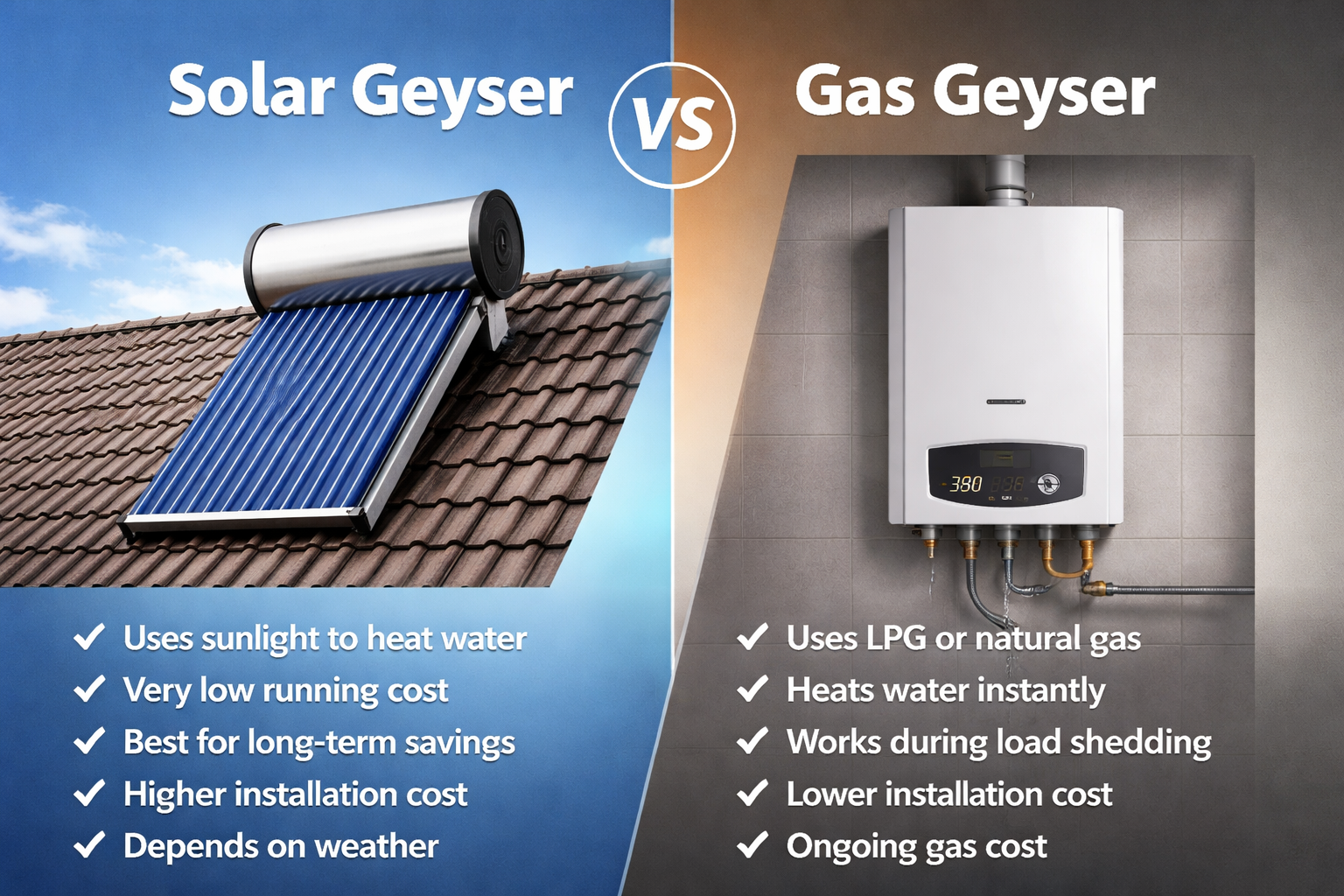
Choosing between a solar geyser and a gas geyser is one of the most important decisions for homeowners looking to reduce energy costs and improve hot water reliability.
Both systems solve the same problem — heating water — but they differ significantly in:
- installation requirements
- operating costs
- safety and compliance
- long-term savings
This guide provides a technical, financial, and regulatory comparison to help you make the right decision.
System Overview – How Each Works
Solar Geyser System
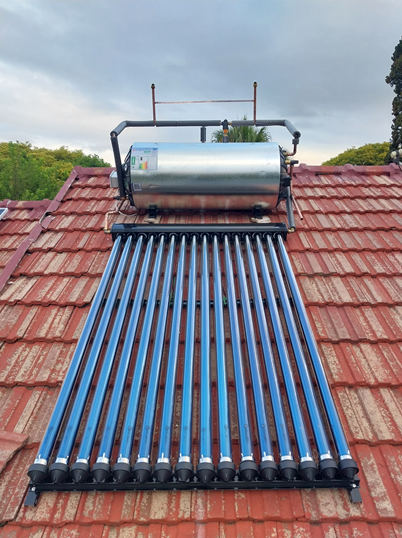
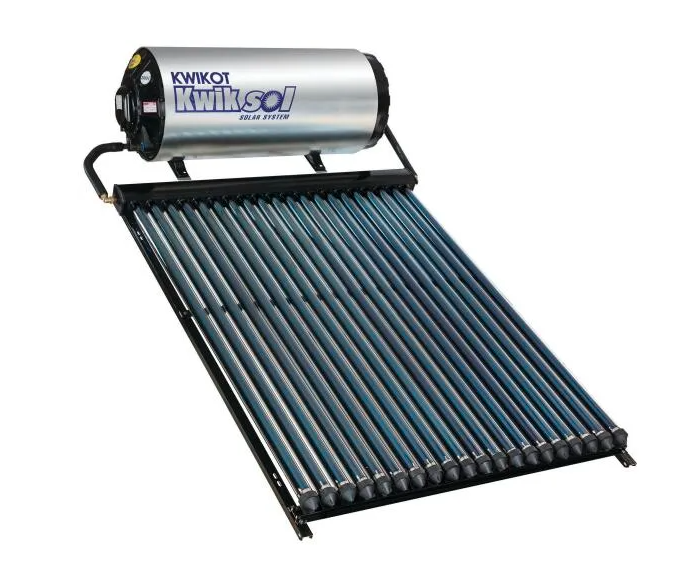
A solar geyser uses solar collectors to absorb sunlight and heat water stored in an insulated tank.
Key characteristics:
- renewable energy source
- storage-based system
- minimal running cost
Gas Geyser System
A gas geyser heats water instantly using LPG or natural gas burners.
Key characteristics:
- on-demand heating
- no storage tank required (in most cases)
- continuous fuel consumption
Installation Complexity – Solar vs Gas
Solar Geyser Installation
Solar installation requires:
- roof-mounted collectors
- structural mounting systems
- plumbing integration
- pressure control valves
- electrical backup element
A qualified solar geyser installer ensures proper orientation, pipe insulation, and compliance with building standards.
Gas Geyser Installation
Gas geyser installation involves:
- gas supply connection (LPG cylinders or pipeline)
- ventilation system
- flue installation
- pressure regulators
- ignition system setup
A certified gas geyser installer must ensure safe combustion and correct ventilation.
Certificate of Compliance (COC) Requirements
Compliance is critical for both systems in South Africa.
Solar Geyser COC Compliance
Solar installations must comply with:
- SANS 10106 (solar water heating systems)
- SANS 10400-XA (energy efficiency in buildings)
A solar geyser Certificate of Compliance (COC) confirms:
- safe installation
- correct pressure systems
- compliant plumbing
Gas Geyser COC Compliance
Gas installations must comply with:
- SANS 10087 (gas installations)
A gas COC certificate is mandatory and verifies:
- proper ventilation
- leak-free connections
- safe combustion system
⚠️ Without a valid COC, insurance claims may be rejected.
Cost Comparison – Installation & Running Costs
Upfront Installation Cost
| System | Typical Cost Range |
|---|---|
| Solar Geyser | R18,000 – R45,000 |
| Gas Geyser | R8,000 – R20,000 |
Monthly Running Costs
| System | Monthly Cost |
|---|---|
| Solar Geyser | Very Low |
| Gas Geyser | Medium (ongoing gas refills) |
Real Savings Calculation (Case Study)
Scenario
Household in Johannesburg:
- Monthly electricity bill: R1,200
- Water heating portion: ±40% → R480
Solar Geyser Scenario
- Reduces heating cost by ±70%
- New cost: ±R144
Monthly savings: R336
Annual savings: R4,032
Gas Geyser Scenario
- Eliminates electricity usage for water heating
- But introduces gas cost: ±R300–R600/month
Savings fluctuate depending on gas usage and pricing
Performance Comparison
| Feature | Solar Geyser | Gas Geyser |
|---|---|---|
| Hot Water Supply | Stored | Instant |
| Energy Source | Sun | Gas |
| Load Shedding | Works | Works |
| Weather Impact | Yes | No |
| Running Cost | Very Low | Medium |
| Installation Complexity | High | Medium |
Advantages of Solar Geysers
When installed correctly by a Qualified Plumber who is an accredited Solar Water Heating Systems Installer
- lowest long-term operating cost
- renewable energy source
- long lifespan (15–20 years)
- increases property value
- compliant with energy efficiency regulations
Advantages of Gas Geysers
When installed correctly by a Qualified Gas Installer
- instant hot water on demand
- lower upfront cost
- independent of sunlight
- compact installation
Disadvantages of Solar Geysers
- higher initial installation cost
- dependent on sunlight conditions
- requires roof space
- installation quality critical
Disadvantages of Gas Geysers
- ongoing fuel costs
- strict safety requirements
- requires ventilation and compliance
- potential safety risks if poorly installed
Safety & Risk Analysis
Solar Geyser Risks
- pressure build-up if valves fail
- leaks due to poor installation
Gas Geyser Risks
- gas leaks
- carbon monoxide exposure
- fire hazards
Proper installation and compliance certification eliminate most risks.
Which System Is Best for You?
Choose Solar Geyser If:
- you want long-term savings
- you live in high sunlight regions like Gauteng
- you plan to stay in your property long-term
Choose Gas Geyser If:
- you need lower upfront cost
- you want instant hot water
- you have limited roof space
Integrated Solutions – Hybrid Systems
Some homeowners combine both systems:
- solar geyser for primary heating
- gas geyser as backup
This creates a high-efficiency hybrid solution.
Why Use Juspropa for Installation & Compliance
Juspropa connects homeowners with:
- certified solar geyser installers
- licensed gas geyser installers
- COC certification services
- repair and maintenance professionals
This ensures:
- compliant installations
- safe systems
- optimal performance
Solar Geyser vs Gas Geyser South Africa
Read more to make an informed decision: Costs, Savings, Installation & COC Guide
Final Verdict
- Solar geyser = best long-term savings. Get a Solar Geyser Quote Now
- Gas geyser = best short-term flexibility. Get a Gas Geyser Quote Now
For most South African households, solar geysers deliver the highest return on investment, while gas geysers offer a practical alternative in specific scenarios.


Reviews
There are no reviews yet.